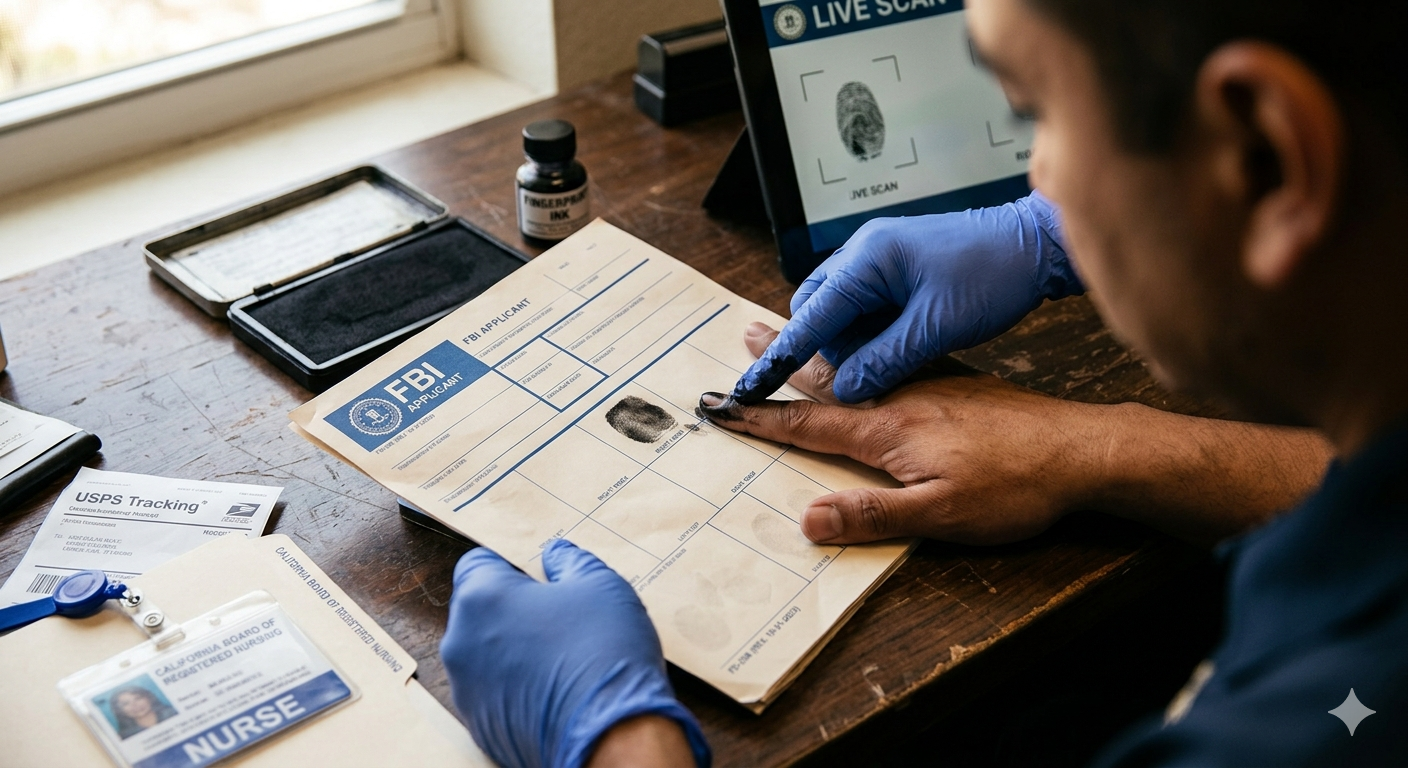
Did you know that every single day, the FBI receives roughly 50,000 fingerprint submissions? That is a staggering amount of ink and digital data flying toward West Virginia. If you’ve been told you need a background check for a new job, a professional license, or even an international adoption, chances are you’ve just been handed a task involving the “blue card”—formally known as the FD-258 Fingerprint Card.
While the world is going digital, this specific piece of heavy cardstock remains the gold standard for “civil” fingerprinting. Whether you’re a nurse getting licensed or a digital nomad applying for a residency visa in Spain, the FD-258 is the bridge between your identity and the FBI’s massive database.
What is an FD-258 card, really?
Here’s the thing: while it looks like a simple 8×8-inch square of paper, the FD-258 is a high-tech legal document. It is specifically designed to capture your “ten-print” set (all ten fingers) in a format that the FBI’s Next Generation Identification (NGI) System can digest.
According to the U.S. Government Publishing Office (GPO), as of April 2026, the FD-258 is the official form used by law enforcement, federal agencies, and even banking institutions to conduct national criminal history record checks. It’s not just “paper”—it’s a data entry portal.
So, what does this actually mean for you?
Let’s be honest: the process feels archaic. You might be wondering, “Why can’t I just scan my thumb on my iPhone and call it a day?”
The reality is that for a “Identity History Summary Check” (what most people call a background check), the FBI requires a level of detail that consumer tech just can’t match. As of January 2026, the FBI updated its policies to allow for more “fingerprint reuse” in certain sectors, but for most first-time applicants, a fresh set of prints on an FD-258 is still non-negotiable.
Think of it like a high-resolution passport photo. A selfie might work for your gym membership, but the government needs the “official” version to ensure you are who you say you are.
The Anatomy of the Card: Don’t Get Rejected
When you look at the card, you’ll see a series of small boxes. These aren’t suggestions. According to the FBI’s March 2026 NGI Fact Sheet, the system is now more sensitive than ever to “alignment errors.”
You have two main sections:
- The “Rolled” Impressions: These are the large boxes at the top where the technician rolls your finger from nail-edge to nail-edge to capture the full ridge detail.
- The “Slaps” or Plain Impressions: These are the long boxes at the bottom. You press your four fingers down simultaneously. This acts as a “checksum” to make sure the technician didn’t accidentally put your left index finger in the right index box.
Pro-Tip: Make sure the technician uses black ink (or a high-quality digital printer). According to official FBI guidelines updated in October 2023 (and still strictly enforced in 2026), using blue ink or a faint ribbon is an automatic ticket to the rejection pile.
Ink vs. Digital: Which way should you go?
In 2026, you generally have two paths to fill out your card:
- The “Old School” Ink Method: A technician rolls your fingers in ink and presses them onto the card. It’s messy, but it’s universally accepted.
- The “Live Scan” to Card Method: You place your fingers on a glass scanner. According to Certifix Live Scan (April 2026), the machine then “prints” these digital images onto a physical FD-258 card.
The “Live Scan” method is usually better because the software can tell you instantly if a print is too blurry. If you use ink and the FBI can’t read it, they’ll send a “Rejected” (REJT) notice, and you’ll have to start the whole process over—and pay the fee again.
Did You Know? The FBI’s Next Generation Identification (NGI) System currently holds over 81 million civil fingerprint records. That’s nearly a quarter of the U.S. population!
Quick Question — Poll
How do you feel about your fingerprints being in a federal database for a job application?
- A) Totally fine—safety first!
- B) A little uneasy—I worry about data privacy.
- C) It’s just a “necessary evil” of modern life.
Drop your answer in the comments!
The “Human” Factor: Why Nurses and Mechanics Struggle
Here is something nobody tells you: your job can actually make fingerprinting harder. According to a California Board of Registered Nursing bulletin from April 2026, professionals who wash their hands constantly (like nurses) or handle chemicals (like mechanics) often have “worn down” ridges.
If you’re in this camp, the FBI recommends using a heavy-duty moisturizer for a few days before your appointment to help those ridges “pop” for the scanner.
Quick Recap
- The Standard: The FD-258 is the only card accepted by the FBI for civil background checks.
- The Accuracy: Rejections are usually due to poor print quality or incomplete data fields (don’t forget your SSN if you have one!).
- The Speed: Digital submissions via a “Channeler” are roughly 10x faster than mailing a physical card.
What to Watch
As of April 2026, the FBI is testing a new Biometric Rapid Mobile Search capability. While this won’t replace the FD-258 yet, it hints at a future where your “background check” might happen via a secure app on your own phone. Until that becomes policy, keep those paper cards safe!
FAQ: Your Top Questions Answered
Q: Can I print the FD-258 at home on my own printer? You can download the PDF from the FBI website and print it on standard white paper. However, many agencies (especially for international use) still prefer the official cardstock because it doesn’t wrinkle or smudge as easily.
Q: How long does the FBI keep my prints? According to the NGI System Fact Sheet, civil fingerprints are generally retained in the database unless the submitting agency requests their deletion. They are used for “continuous vetting,” meaning if you get in trouble later, the agency that hired you might get an automated alert.
Q: What happens if I have a missing finger or a permanent scar? Don’t panic! The technician will mark that box as “Missing” or “Unable to Print.” The FBI system is smart enough to process the remaining nine fingers without rejecting the whole card.
Have you ever had to get fingerprinted for a job? Was it a smooth process or a total ink-stained mess?