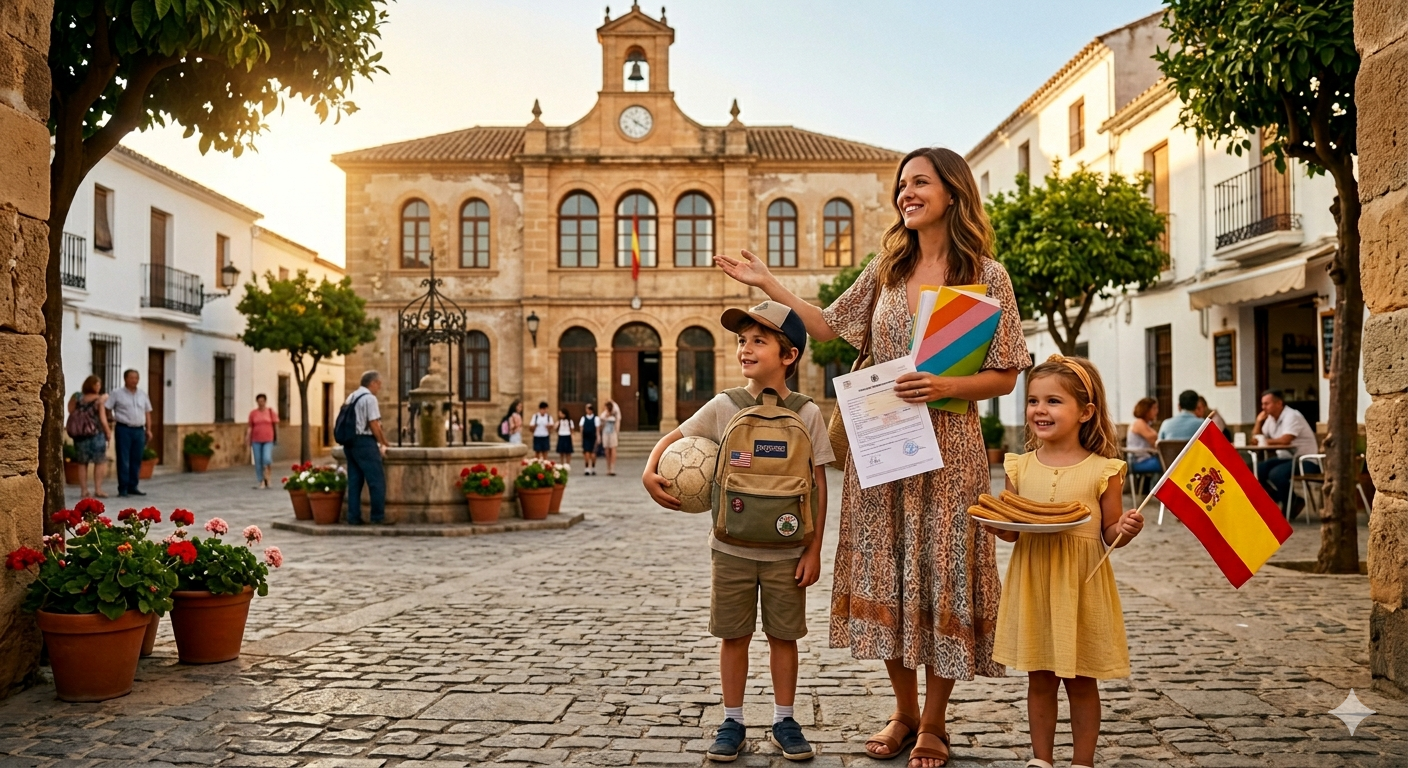
You’re standing in your kitchen in suburban America, surrounded by half-packed boxes and a growing pile of paperwork. The dream of moving to Spain is finally happening, but then it hits you: how on earth do you get your kids into a school there without losing your mind—or your deposit?
Here’s the thing: while the Spanish bureaucracy is legendary for its “come back tomorrow” energy, the school system is surprisingly welcoming to international families. According to the Spanish Ministry of Foreign Affairs, as of January 2026, children between the ages of 6 and 16 have a guaranteed right to education in Spain, regardless of their parents’ legal residence status.
What does this actually mean for you?
In plain English, if you are living in Spain, your child goes to school. Period. Whether you’re on a Digital Nomad Visa or just waiting for your residency card (TIE) to arrive, the system prioritizes the child’s right to learn.
Think of it like a local library card. You might need to prove you live in the neighborhood, but they aren’t going to check your tax returns before letting you borrow a book. In Spain, this “neighborhood proof” is called the empadronamiento—your registration at the local town hall.
The “Golden Ticket”: What is Empadronamiento?
Let’s be honest, you can’t do much of anything in Spain without being empadronado. This is simply the process of telling the local municipality, “Hey, we live at this address now”.
According to official regional portals as of May 2026, you generally need your rental contract or a utility bill to get this done. Once you have that certificate, you’ve unlocked the door to the public school system.
So, when should you start the scramble?
Timing is everything. If you’re eyeing the 2026-2027 school year, you need to be ready by spring.
- Public and Concertado Schools: The main application window usually opens in March or April.
- Private/International Schools: These operate like elite clubs—they have their own rules and often fill up 6 to 12 months in advance.
Did You Know?
The Spanish government has set a massive target to host 200,000 international students by 2026, leading to smoother visa processes and more support for foreign families.
What documents do you actually need?
Gathering paperwork for a Spanish school feels a bit like preparing for a lunar mission. According to the Ministry of Education, for the 2026 intake, you will typically need:
- Proof of Identity: Passports for parents and the child.
- The Empadronamiento: That town hall registration we talked about.
- Vaccination Records: Your pediatrician’s records usually suffice, but they might need a certified translation.
- Birth Certificate: The “long-form” version is your best bet.
For older kids (entering high school), there is an extra boss level called Homologación. This is the official process of proving that your child’s American 9th-grade education is equivalent to the Spanish ESO. This can take months, so start it the moment you decide to move.
Quick Question — Poll
What’s your biggest worry about the move?
- A) The language barrier for my kids.
- B) The mountain of paperwork.
- C) Finding the right neighborhood.
Drop your answer in the comments!
Quick Recap
- Registration First: Get your empadronamiento immediately upon arrival; it’s the key to school placement.
- Spring is King: Most public school applications happen between March and May for a September start.
- High Schoolers Beware: If your child is 14 or older, start the Homologación (degree recognition) process as early as possible.
FAQ: Your Top Questions Answered
Q: Does my child need to speak Spanish to enroll?
No. For compulsory education (ages 6–16), knowledge of Spanish is not a requirement for admission to public schools. Many regions offer “Aula de Enlace” (bridge classes) to help international kids catch up.
Q: Are there school buses like in the US?
Rarely for public schools. Most kids walk to their neighborhood school, which is why your empadronamiento address is so vital for placement.
Q: How much does it cost?
Public schools are state-funded and free, though you’ll pay for books and materials. Concertado schools (semi-private) often ask for a “voluntary” monthly fee (usually €50–€200), while international schools can cost anywhere from €7,000 to over €25,000 per year.
What’s one thing about the Spanish school system that surprises you the most?
Source Citations:
- “Studying in Spain for Foreigners: Universities, Schools and Student visa,” Realting.com, updated January 2026.
- “Study in Spain 2026: Top Universities, Scholarships & Cost,” Vibedu.com, 2026.
- “Homologation of studies in Spain: requirements and help,” Academia Guiu, updated 2026.
- “Understanding the School Admissions Process in Spain,” Smooth Move Ed, September 2025.
- “Student visa in Spain 2026,” Immigration Resolution, 2026.