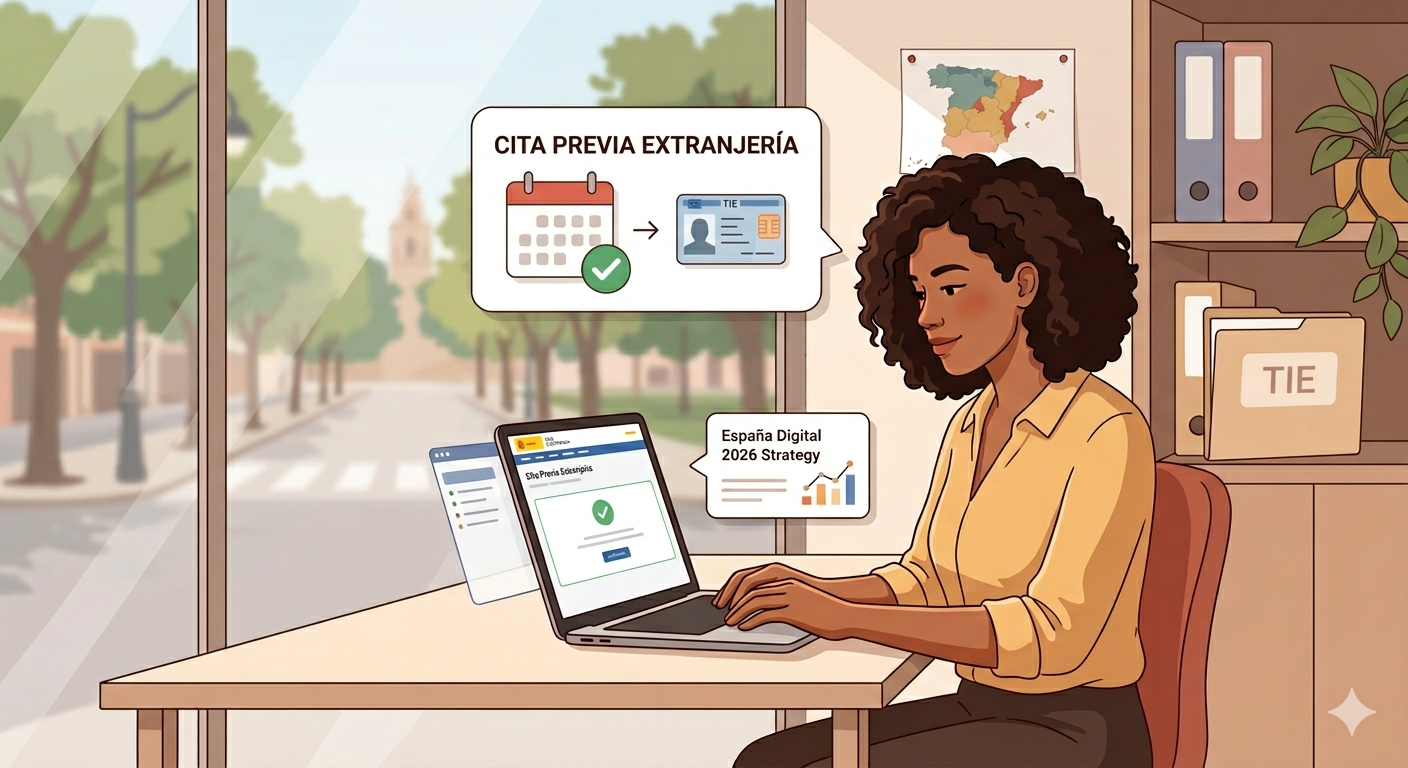
Discover how to navigate Spain’s updated system and secure your tax number without the typical headaches.
Picture this: You’ve just landed in sunny Valencia. The tapas taste amazing, the beach is a short walk away, and you’re ready to sign a lease on a gorgeous apartment. But when you meet the landlord, they ask for your NIE. Without it, you can’t rent the flat, open a bank account, or get a Spanish SIM card to tell your family you arrived safely.
Here’s the thing—trying to live your best life in Spain without an NIE is like trying to drive a car without keys. It is the ultimate administrative skeleton key for expats.
Fortunately, getting one doesn’t have to feel like fighting a losing battle against Spanish bureaucracy. Let’s look at how to get a NIE in Spain quickly and efficiently.
So what does this actually mean for you?
To target our featured snippet right out of the gate: The NIE (Número de Identificación de Extranjero) is a mandatory, lifelong tax identification number issued by the Spanish government to foreign nationals who wish to work, buy property, or conduct any legal transaction in Spain.
According to the Spanish Ministry of Foreign Affairs, European Union and Cooperation, this unique code identifies you across all administrative branches, though it does not automatically grant you the legal right to reside in the country. Think of it as a social security number, but specifically tailored for expats.
If you are an EU citizen, you need to grab this number within your first three months on Spanish soil. For non-EU folks, you will typically get your NIE assigned automatically when you process your residency visa and receive your physical TIE card (Tarjeta de Identidad de Extranjero).
Quick Poll: Have you already started your relocation paperwork, or are you just testing the waters?
- A) I’m actively booking appointments!
- B) Just dreaming and planning for now.
Drop your answer in the comments section below!
How do you kick off the process?
You have two main paths here. You can either tackle this while you’re still sitting on your couch at home via your local Spanish consulate, or you can dive into the deep end once you arrive in Spain at an immigration office (Oficina de Extranjería) or designated national police station.
Let’s be honest, booking a slot from inside Spain has notoriously been like trying to score front-row concert tickets. But things are looking up. According to official guidelines updated by regional authorities, many offices—like Mallorca’s main immigration hub—have revamped their scheduling systems, reducing total wait times on-site to just one or two hours if you have a pre-booked appointment.
To secure your spot online from within Spain, you must log onto the government’s official Sede Electrónica portal, choose your province, and select the option labeled “Asignación de N.I.E.”
What paperwork do you need to bring?
Spanish administrative offices are famous for their love of paper. If you don’t bring the exact documents requested, the administrative officers will send you home without a second thought.
According to the standardized application protocol outlined on official Spanish consular sites, your master checklist must include:
- Form EX-15: The official NIE application form. It must be filled out in Spanish, though you can use English translated guides online to help you figure out what the boxes mean.
- Your Valid Passport: Plus clean, single-sided photocopies of your photo page.
- Proof of Purpose: An official document showing why you actually need the number. This could be a signed Spanish employment contract, a property purchase agreement, or a formal letter from a notary.
- Form 790-012 Receipt: This is your proof that you paid the official processing fee.
💡 Did You Know?
According to data from the Spanish General Commissariat for Immigration and Borders, regional processing backloads in major tech and expat hubs like Madrid and Barcelona can mean a wait time of 4 to 8 weeks just to land an available online appointment slot. If you are moving during peak summer relocations, booking early is vital.
What to Watch: Digital Shifts
The Spanish government is actively rolling out broader digital administration initiatives across the board. Keep an eye out for expanded online verification options through the Cl@ve digital signature system, which may completely phase out the need for physical bank visits for fee payments in several progressive autonomous communities later this year.
Quick Recap
- The absolute essentials: Secure an online cita previa (appointment) early, download Form EX-15, and always bring original documents plus photocopies.
- Pay beforehand: Complete Form 790-012 and pay the €12 processing fee at a physical bank before showing up to your police station appointment.
- Protect the paper: Your physical NIE is printed on standard white or green paper. Do not laminate it, as this can void the security features. Take a digital scan and back it up on your phone immediately.
FAQ: Your Pressing Questions Answered
Can I get an NIE if I don’t have a job offer yet?
Yes. You can legally apply for an NIE by providing other valid economic or social reasons, such as opening a Spanish bank account to deposit funds, preparing to buy a vehicle, or showing proof that you are actively setting up a freelance business.
Does my Spanish NIE number expire?
No. Your NIE number is assigned to you for life. Even if you leave Spain and return years later, that identical number remains tied to your identity. However, temporary three-month certificates are sometimes issued strictly for property purchasing steps before permanent residency is finalized.
Can someone else apply for the number on my behalf?
Yes, you can hire a professional administrative agency (gestoría) or a legal representative to handle the submission. To do this, you must grant them a formal Power of Attorney (poder notarial) that has been notarized and officially apostilled.
Are you currently navigating the Spanish bureaucratic maze, or have you picked up a clever trick at a local office that we missed? Let’s chat in the comments!
Sources & Official References:
- Application Process & Consular Mandates: Ministerio de Asuntos Exteriores, Unión Europea y Cooperación
- Official Online Appointment Portal: Sede Electrónica de la Secretaría de Estado de Administraciones Públicas
- Regulatory Legal Framework: Organic Law 4/2000 & Royal Decree 557/2011 (Immigration and Foreigner Integration Guidelines for Spain).