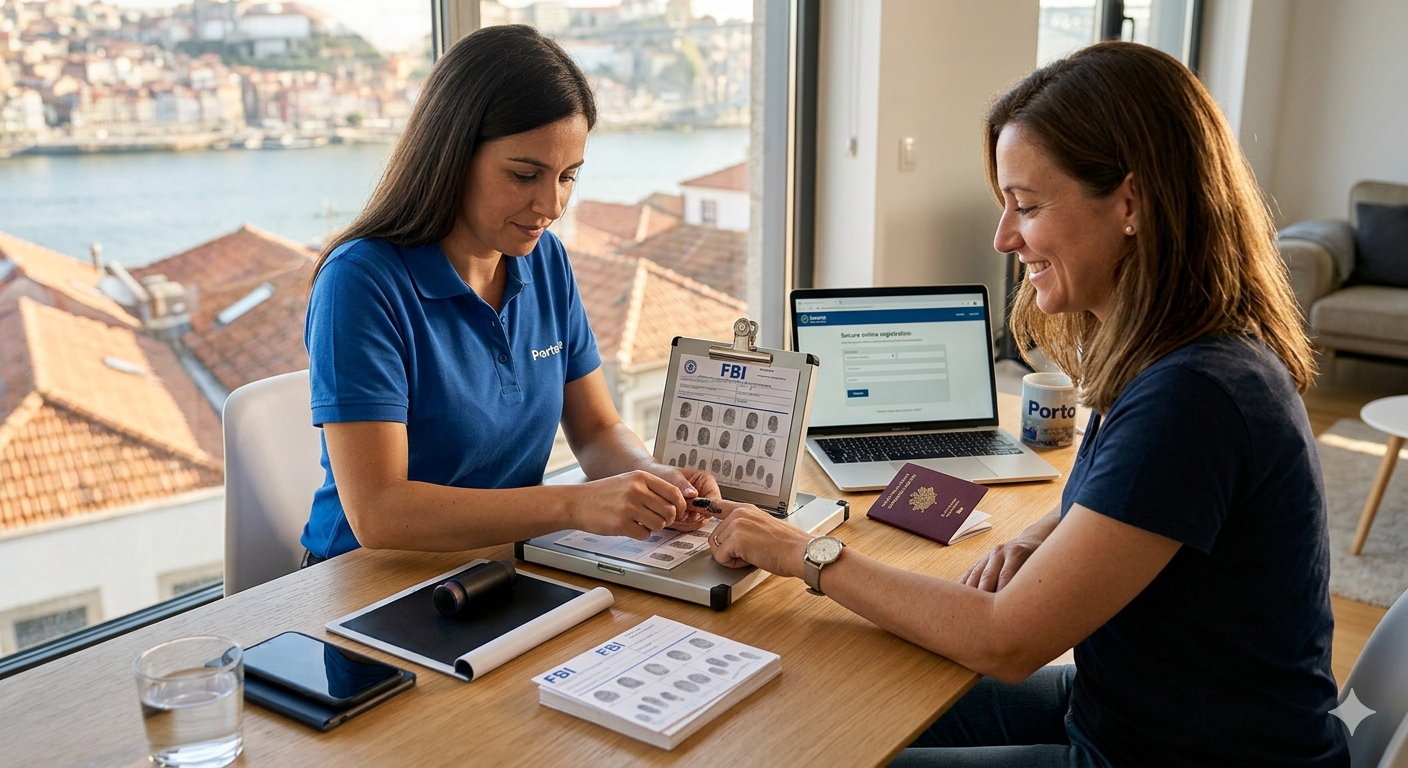
Picture this: You have just landed your dream remote gig, or maybe you are finalizing your paperwork to retire under the palm trees of the Algarve. Your apartment in Porto is sorted, your boxes are unpacked, and your Portuguese immigration appointment is locked in. Then, you scan your document checklist and find a massive roadblock: the government requires a fingerprint-based federal criminal background check from your home country, and they need it pristine, printed, and processed within a 90-day validity window.
Let’s be honest: tracking down traditional law enforcement ink-and-roll services while living as an expatriate in northern Portugal is an absolute logistical nightmare. Many expats assume they can just drop by any local neighborhood police station on a whim to get their fingerprint cards stamped.
Here’s the thing: local Portuguese police stations (esquadras) have no legal obligation to handle foreign biometric cards, and smudged, amateur ink work is the number one reason international agencies reject files. If you are working toward your residency permit, securing a specialized mobile ink fingerprinting service Porto provider is the definitive step to getting your background clearance approved on the very first try.
Why does a mobile fingerprinting service beat traveling to Lisbon?
Historically, if an American or Canadian expat in Porto needed an FBI or RCMP background check, their options were incredibly restrictive. You either had to order a physical mail-in kit and guess your way through a messy DIY ink job, or you had to lose a full working day booking a train down to the US Embassy in Lisbon.
The embassy’s specialized employee cooperative only handles fingerprinting sessions on select weekdays by strict, limited appointments. Once you factor in train tickets, a hotel stay, and lost billable hours, that single piece of cardstock can easily cost you hundreds of euros.
The Snippet Target: Utilizing a mobile ink fingerprinting service Porto option allows international residents to have their official FBI FD-258 or RCMP C-216C fingerprint cards collected directly from their home, office, or local coworking space by certified professionals.
Instead of letting bureaucratic travel stall your workflow, professional technicians bring the necessary ink-and-roll equipment straight to you. It is the ultimate administrative shortcut for busy remote workers navigating the Portuguese visa pipeline.
Did You Know?
The Skin Moisture Factor: International fingerprint clearinghouses reject thousands of manual submissions simply because the applicant’s skin was too dry. Experts recommend heavily moisturizing your fingertips multiple times a day for a full week before your appointment to ensure the ink adheres smoothly to your skin ridges without creating blurs.
So what does the mobile process actually look like?
Working with a mobile technician means you bypass the stressful guesswork of legal paperwork. Private international compliance services have streamlined the entire pipeline into a coordinated, professional workflow.
Think of it like booking a high-end mobile repair tech for your smartphone. They arrive fully prepared, complete the specialized task utilizing industry-grade materials, and manage the underlying logistics so you don’t have to visit a government office.
- The Secure Intake: You begin by completing a secure online portal form to confirm your exact document type—such as the standard blue-and-white FBI FD-258 card.
- The At-Home Session: The technician arrives at your location in Porto, verifies your identity against your passport, and takes both flat and rolled ink impressions of all ten fingers.
- The Submission Relay: Instead of relying on regular international mail, the service coordinates the secure transit of your physical cards to an approved channeler for rapid processing.
Step-by-Step: Managing your background check timeline
Because Portuguese immigration authorities expect background files to be fresh, coordinating your calendar is vital. Follow this sequence to maximize your document validity window:
1.Book your mobile appointment and complete the digital intake form:Timeframe: 4-5 months before your visa deadline.
Schedule your mobile service session online. Fill out the smart digital forms completely, ensuring the name on your background request perfectly matches your legal passport profile to avoid instant rejections.
2.Submit the ink cards through an expedited channeler:Timeframe: Within 48 hours of print collection.
Your mobile provider will verify the print ridge quality and route your physical cards to a federal channeler. Channelers convert your ink cards into high-resolution digital data, dropping wait times down dramatically compared to traditional mail.
3.Secure the federal apostille and local Portuguese translation:Timeframe: 3 months before your visa deadline.
Once your background clearance drops, the document must be sent to your home country’s federal department to receive a Hague Apostille. Pair the final apostilled file with a local certified translation before walking into your immigration meeting.
Quick question for the Porto expat community:
Are you currently gathering your background documents independently or using an all-inclusive concierge agency?
- A) I’m managing the timeline and steps entirely on my own.
- B) I’m utilizing a coordinated service to handle the printing, tracking, and submissions.
Drop your letter choice in the comments section below!
What to Watch: Stricter Digital Background Check Rules
If you are finalizing your immigration plans, keep a close eye on administrative processing patterns. Portuguese immigration offices have notably increased their rejection rates for background checks submitted without a verified federal apostille. State-level police certificates are no longer accepted across major local consulates. Furthermore, processing times at federal authentication offices fluctuate wildly. If your visa appointment falls during peak relocation seasons, utilizing a combined fingerprinting and apostille coordination service is your best insurance policy against a forced visa restart.
Quick Recap
- Doorstep Convenience: Mobile fingerprinting services bring official ink-and-roll capabilities straight to your home or workspace in Porto.
- Rejection Shield: Professional print capturing prevents smudges, significantly lowering the risk of international federal agency rejections.
- Strict Timeline: Your background report must be fresh, so align your print collection closely with your immigration target window.
Frequently Asked Questions
Can a mobile service in Porto capture prints for Canadian RCMP checks?
Yes, absolutely. Mobile operators can capture your physical ink impressions on the official Canadian C-216C forms, which are later digitized and securely transmitted to an accredited agency for processing by the RCMP.
What happens if my fingerprints are rejected by the FBI due to low quality?
If the print quality is deemed insufficient, the clearinghouse will reject the submission, requiring a total reset of your timeline. Using a professional service mitigates this because technicians audit your print clarity on-site before your cards are shipped out.
Do I need to provide my own FD-258 fingerprint cards for the appointment?
No, you generally do not need to supply them. When you book a reputable mobile service, the technician will arrive with standard, heavy-weight FD-258 cards specifically approved for federal applicant processing.
Have you ever had to deal with delayed paperwork due to a smudged or rejected fingerprint card? Tell us about your relocation experiences or drop your questions in the comments below!
Sources Verified via Official Channels:
- U.S. Embassy & Consulate in Portugal (Citizen Services and Fingerprinting Guidelines)
- Federal Bureau of Investigation – CJIS Division (Identity History Summary Verification Standards)
- Hague Conference on Private International Law – HCCH (Apostille Convention Regulations)