Everything you need to know about navigating Spain’s strict new certified translation rules without the headache.
Imagine standing at the front of a long queue at the Extranjería in Madrid. You’ve spent months gathering paperwork, your visa appointment is finally here, and you hand over your birth certificate with a smile. The officer looks at it for two seconds, frowns, and hands it back. “This isn’t a traducción jurada,” they say. Just like that, you’re back to square one.
If you’re planning to live, work, or study in Spain, a certified translation Spain (known locally as a traducción jurada) isn’t just a “nice to have”—it is the gatekeeper of your legal status.
So, what actually makes a translation “official” in Spain?
Here’s the thing: Spain doesn’t care if your cousin is fluent in Spanish or if you used the best AI software on the planet. For a document to hold water with the Spanish government, it must be produced by a Traductor Jurado.
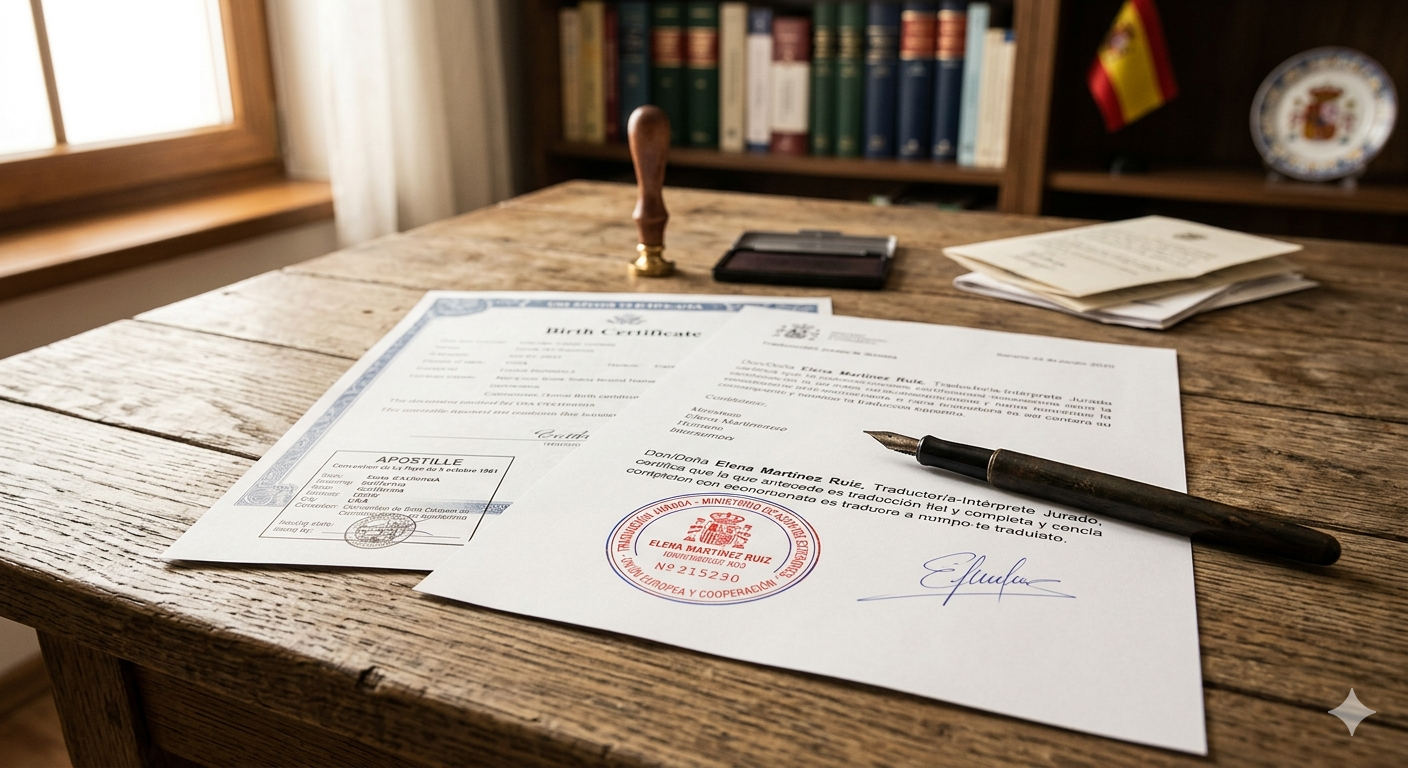
These are translators specifically authorized by the Spanish Ministry of Foreign Affairs, European Union and Cooperation (MAEC). According to the latest MAEC guidelines updated in early 2026, every page of your translation must bear the official stamp and signature of the translator, including a specific certification formula that swears the translation is a faithful account of the original.
Think of it like a digital signature, but with much more legal weight. Without that specific stamp, your document is essentially just a piece of paper with some Spanish words on it.
Did You Know? As of the most recent MAEC registry update, there are fewer than 10,000 active sworn translators in Spain for all language combinations. For rare languages, you might be looking at a waitlist of weeks!
Does every document need this treatment?
Let’s be honest, getting everything translated is expensive. You don’t need to translate your high school swim team certificate. However, if a document is issued by a foreign authority and you’re presenting it to a Spanish public body, it needs to be “sworn.”
Common documents include:
- Birth and marriage certificates
- Criminal record checks (a big one for visas!)
- Academic transcripts and diplomas
- Medical certificates
One mistake people often make is forgetting the Apostille. According to the Hague Convention (which Spain has followed since 1978), most official documents need an “Apostille” stamp from their home country before they are translated. If you translate the document but not the Apostille, the Spanish authorities will likely reject it.
Is the “Digital Stamp” actually legal now?
This is where things get interesting for 2026. For a long time, Spain was obsessed with “wet ink” signatures—physical paper sent via snail mail.
However, following the digital transformation push accelerated by the EU’s “Digital Decade” goals, the Spanish Ministry now fully accepts translations signed with a verified Electronic Signature. According to the MAEC’s official portal, a digital traducción jurada in PDF format is just as valid as a paper one, provided it uses a recognized electronic signature system (like Firma electrónica).
This is a lifesaver. It means you can receive your certified translation Spain via email in minutes rather than waiting three days for a courier.
Quick question for you: Are you a “keep the physical paper in a folder” person, or are you happy to go 100% digital with your legal docs? Drop your answer in the comments.
How do you avoid getting scammed?
Not everyone who claims to be a “certified translator” online is actually recognized by the Spanish government. If you hire someone who isn’t on the official list, you’re essentially throwing your money away.
Before you pay a cent, check the Official List of Sworn Translators (Listado de Traductores-Intérpretes Jurados) published by the Ministry of Foreign Affairs. It’s a massive PDF updated regularly. If your translator’s name and ID number aren’t there, keep looking.
An analogy to keep in mind: Hiring a non-certified translator for a Spanish visa is like buying a ticket to a concert from a guy in a dark alley. It might look like the real thing, but it won’t get you past the security guard at the door.
What to Watch: Upcoming Changes
Keep an eye on the EU’s Regulation 2016/1191. While it’s been around for a while, its implementation is getting smoother. This regulation allows certain public documents (like birth or death certificates) issued by one EU country to be accepted in another without a translation, provided they are accompanied by a “Multilingual Standard Form.”
If you are an EU citizen moving to Spain, check if your home country offers these forms. It could save you hundreds of Euros in translation fees.
Quick Recap
- Only use MAEC-authorized translators: Check the official Ministry list to ensure your translator is legit.
- Apostille first, translate second: Ensure your original document is legalized before the translator starts their work.
- Digital is okay: Electronic signatures are now widely accepted by Spanish consulates and government offices.
FAQ: The Fast Answers
Can I translate my own documents if I’m fluent in Spanish? No. Even if you are a native speaker or a professional translator, you cannot certify your own documents for Spanish authorities. It must be an objective third party registered with the MAEC.
How long does a certified translation stay valid? Technically, the translation itself doesn’t expire, but the original document might. For example, Spanish authorities usually require criminal record checks and marriage certificates to be issued within the last 3 to 6 months.
How much does a certified translation in Spain cost? Pricing usually depends on the word count and the rarity of the language. On average, expect to pay between €40 and €80 for a standard one-page document like a birth certificate.
What’s been the most frustrating part of your paperwork journey so far? Let’s talk about it in the comments below!