Everything you need to know about navigating Spain’s latest health document requirements without the headache.
Imagine standing at the desk of a Spanish residency office or a local health center (centro de salud), only to be told that your lifetime of immunizations is “invisible” because the paperwork is in the wrong language. It’s a classic expat hurdle that can stall your residency, your kid’s school enrollment, or your access to the public healthcare system.
Here’s the thing: Spain is famous for its bureaucracy, but it’s also very consistent. If you play by the rules, the doors swing open. If you don’t, you’ll be spending a lot of time in waiting rooms.
Let’s break down how to handle your vaccination record translation Spain requirements so you can get back to scouting the best tapas in your new neighborhood.
Why does Spain care about your old shots?
Whether you are applying for a “Digital Nomad” visa, a standard residency card (TIE), or enrolling a child in school, Spain needs to verify that your medical history aligns with their public health standards.
According to the Spanish Ministry of Health (Ministerio de Sanidad), as of early 2026, foreign residents must demonstrate their immunization status to integrate into the Sistema Nacional de Salud. Think of it like a “health passport”—if they can’t read it, you haven’t arrived yet.
Does a simple translation work?
Let’s be honest: you might be tempted to use a translation app or ask your bilingual cousin to help out. Don’t.
For official administrative processes in Spain, the government generally requires a Traducción Jurada (Sworn Translation). This isn’t just a “good” translation; it’s a legal document signed and stamped by a translator authorized by the Spanish Ministry of Foreign Affairs (MAEC).
Did You Know? According to data from the Spanish Ministry of Foreign Affairs, there are over 10,000 certified sworn translators, but only those registered with the MAEC seal are legally recognized for residency applications.
What exactly needs to be translated?
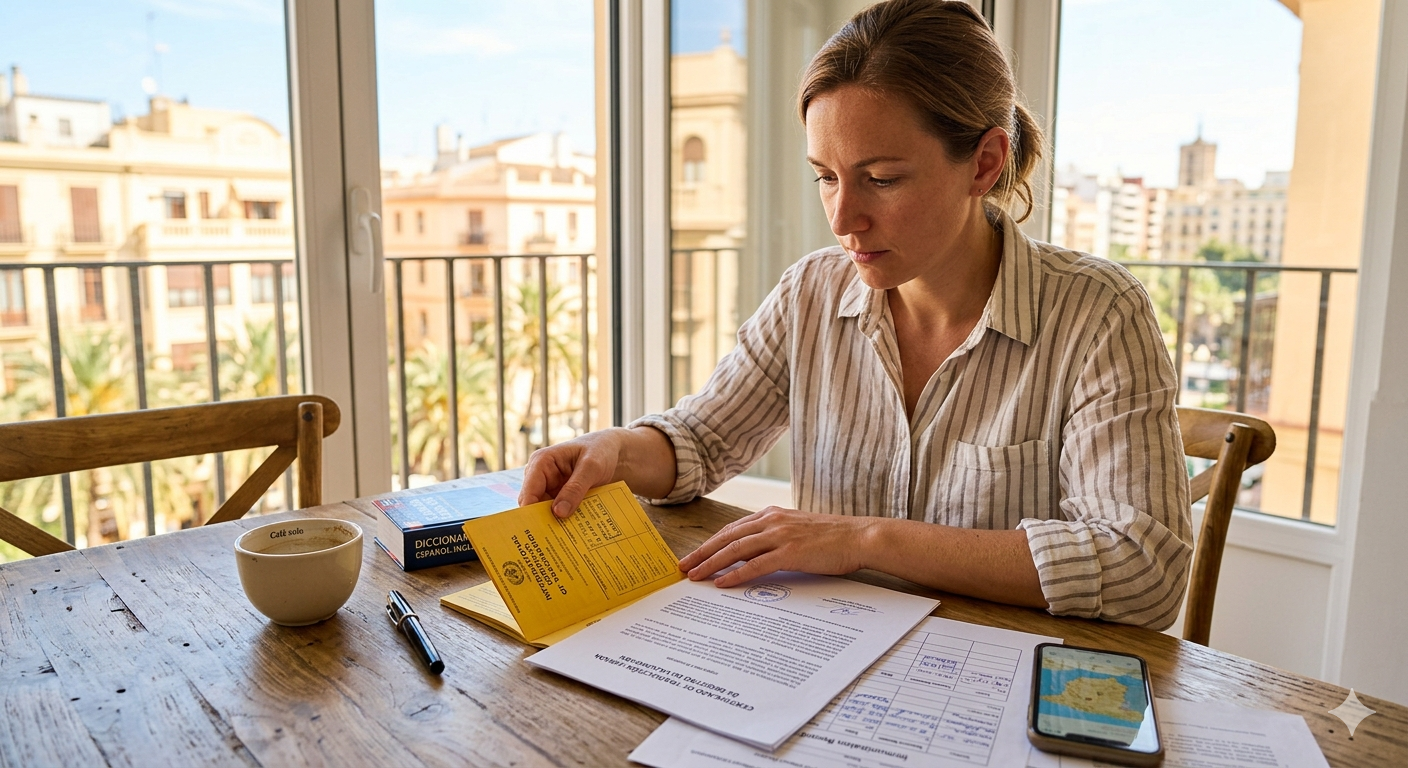
You don’t necessarily need to translate every single doctor’s note you’ve ever received. Usually, the “International Certificate of Vaccination or Prophylaxis” (the yellow book) or a formal summary from your GP is enough.
The key is ensuring the following are crystal clear:
- The generic names of the vaccines (e.g., sarampión for measles).
- The exact dates of administration (Day/Month/Year).
- The batch numbers and the medical provider’s official stamp.
So, what does this actually mean for you?
If you’re coming from the US, UK, or Australia, your records are likely in English. While many Spanish doctors speak English, the funcionario (civil servant) processing your residency file likely does not—or more accurately, they are legally required to work only with Spanish documents.
Here is a real-world example: A family moving from London to Valencia assumes their NHS records are fine because they are “international.” At the school registration, they are turned away because the record isn’t a Traducción Jurada. They end up paying “rush” fees for a translator, costing double what it would have if they’d planned ahead.
Quick question — Have you already started gathering your physical medical records from your home country?
- A) Yes, I have the originals.
- B) No, I’m still waiting for my doctor’s office to call me back.
- C) My records are entirely digital. Drop your answer in the comments!
What to Watch: New Digital Standards
The EU is currently pushing for the European Health Data Space (EHDS) to be fully operational by the end of 2026. This aims to make health records digitally portable across borders. However, for those coming from outside the EU, the requirement for a stamped, paper-based sworn translation remains the gold standard for now. Keep an eye on the European Commission’s official portal for updates on digital health ID integration for non-EU nationals.
How to find a reliable translator?
You can find the official list of sworn translators on the Ministry of Foreign Affairs website. Pro tip: You don’t have to hire a translator in your specific city. Since most work is done via scanned PDFs and sent by certified mail, you can compare prices between a translator in Madrid and one in a smaller town like Cáceres.
Quick Recap
- Officiality Matters: Most Spanish regions require a Traducción Jurada (Sworn Translation) for health records to be accepted for residency or schooling.
- Source Check: Ensure your translator is registered with the Spanish Ministry of Foreign Affairs (MAEC).
- Timing is Key: Get your records translated before your appointment to avoid administrative delays or “rush” surcharges.
FAQ: Common Hurdles
1. Can I just use the “Yellow Card” from the WHO? While the WHO International Certificate of Vaccination is widely recognized, some local Spanish health offices still require a sworn translation if the entries are handwritten or in a language other than Spanish or English (and even English is a gamble depending on the province).
2. How much does a sworn translation usually cost? Prices vary, but for a standard 1-2 page vaccination record, expect to pay between €35 and €70. This usually includes the translator’s official stamp and a digital copy.
3. Do I need an Apostille for my medical records? Generally, no. Most Spanish regions do not require medical records to be apostilled, but they do require the translation to be “Sworn.” However, always check the specific requirements of your Oficina de Extranjería, as rules can vary slightly between autonomous communities.
One final thought for the road: If you could digitize your entire medical history into one “Universal Health ID” today, would you trust the privacy settings, or do you prefer keeping the old-school paper trail?
Sources:
- Spanish Ministry of Health (Ministerio de Sanidad) – Vaccination Guidelines 2026
- Spanish Ministry of Foreign Affairs (MAEC) – List of Sworn Translators
- European Commission – European Health Data Space Updates