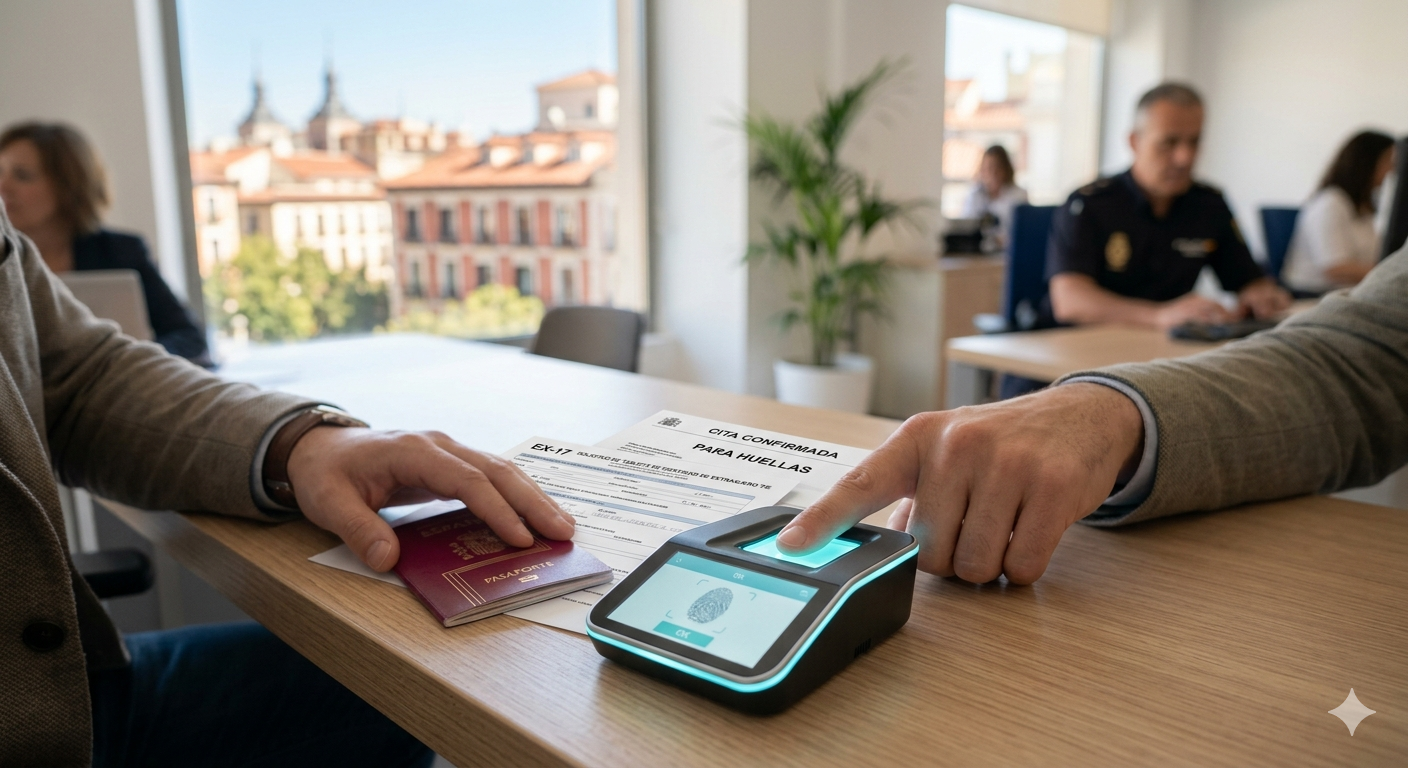
How to navigate Spain’s biometric appointment system smoothly and secure your TIE.
Imagine staring at your computer screen at 7:59 AM on a Friday, finger hovering over the refresh key like you’re trying to score front-row tickets to a massive stadium concert. Except you aren’t buying concert tickets; you are just trying to secure a cita para huellas to get your physical residency card in Spain.
If you’ve spent any time on expat forums, you already know that booking this biometric appointment can feel like winning the lottery. Let’s be honest, dealing with foreign immigration systems is stressful, but it gets a whole lot easier when you know exactly how the system ticks.
What Exactly is a Cita para Huellas?
Here is the straightforward answer to clear up the confusion: a cita para huellas is a mandatory, pre-booked appointment at a national police station in Spain where authorities capture your biometric data to issue your physical Foreigner Identity Card (TIE). Think of it as the final bridge you need to cross. You already have the legal right to stay in the country, but this appointment is what turns that paperwork into the official plastic card in your wallet.
According to the Portal de Inmigración of the Spanish Ministry of Inclusion, Social Security and Migration, this step is required for nearly all non-EU residents, students, and family members of EU citizens after their initial residency residency application is officially approved.
It’s like getting approved for a gym membership online, but you still have to physically walk up to the front desk so they can take your photo and hand over your access pass.
Why Is Everyone Talking About Digital Certificates Now?
Here’s the thing: the way we book these appointments is undergoing a massive shift. According to Spain’s Ministry of Digital Transformation and Civil Service, as of early 2026, the government has accelerated its “Pre-Asignación” and digital identity rollouts across public administration platforms.
What does this mean for you? While you can still use the standard Sede Electrónica public portal with just your passport or NIE number, having a digital certificate (Certificado Digital) or a Cl@ve account is becoming a golden ticket.
Instead of fighting the general public for open slots every Friday morning, users logged in with official digital identities are experiencing faster validation times and smoother booking paths on the platform.
Quick question — Have you already set up your digital certificate or Cl@ve in Spain?
- A) Yes, it’s a lifesaver!
- B) No, the setup process looks too intimidating.
- C) What on earth is a digital certificate?
- Drop your letter in the comments below!
What Do You Absolutely Need to Bring?
Showing up to your appointment missing a single piece of paper is a fast track to getting sent home empty-handed. Treat your appointment folder like gold.
Based on the official guidelines published by the Spanish National Police (Policía Nacional), you must bring these exact items to your appointment:
- Your Appointment Confirmation: The printed PDF showing your time, date, and reservation code.
- The EX-17 Application Form: Completely filled out and signed.
- Your Original Passport: It must be valid and unexpired (plus a full photocopy of your data page).
- Proof of Fee Payment (Modelo 790-012): The physical, stamped bank receipt proving you paid the card fee (which hovers around €12 to €22 depending on your exact residency type).
- A Recent Passport Photo: Specifically a foto carné taken against a plain white background without hats or glasses.
Think of the Modelo 790-012 like a movie ticket. You can’t just show up to the theater with cash in hand; you have to pay the bank beforehand so they can stamp your receipt, which acts as your entry pass into the police station.
Did You Know? According to administrative processing data from Spain’s National Statistics Institute (INE), over 4.5 million foreign nationals hold a TIE or residency registration certificate in Spain. The system processes thousands of biometric requests daily, making strict adherence to document checklists a necessity for processing staff.
Crucial Tips to Score a Booking
If you keep getting the dreaded “No hay citas disponibles” (No appointments available) message, don’t panic.
The system updates dynamically, but regional police offices generally release batches of appointments early in the morning on specific days of the week—usually Mondays and Fridays between 8:00 AM and 9:30 AM.
If you live in a high-demand province like Madrid or Barcelona, you might need to check adjacent municipalities within your province if the system allows it. Just ensure the location matches the jurisdiction where you are officially registered as a resident via your padrón.
Quick Recap
- The Core Purpose: A cita para huellas is the mandatory fingerprinting step required to convert your approved immigration status into a physical TIE card.
- Go Digital for Speed: Utilizing a Spanish digital certificate or Cl@ve identity streamlines your access to the booking portal.
- Check the Checklist: Never show up without a paid Modelo 790-012 form and your original, valid passport.
Frequently Asked Questions (FAQ)
1. Can I go to a police station in a different province if they have appointments?
No. Your appointment must be in the same province where you live and where you are registered on the padrón (the municipal register). If you live in Barcelona, you cannot book an appointment in Madrid or Valencia; the system will reject your processing request.
2. How long does it take to get my physical card after the fingerprinting?
According to general processing times provided by the Ministry of Interior, it typically takes between 30 to 45 days for your physical TIE card to be printed and shipped back to the station. You will usually need to return to the same station to pick it up, sometimes requiring a separate pickup appointment (recogida de tarjeta).
3. What happens if my passport is expired but my residency is approved?
You will face significant issues. The National Police require a valid passport to link your biometric data to your identity. If your passport is expired, you should prioritize renewing it at your home country’s embassy or consulate before booking your fingerprinting slot.
What’s your biggest frustration trying to navigate the Spanish immigration system so far? Let us know in the comments below so we can share strategies!
Sources Consulted:
- Portal de Inmigración, Ministerio de Inclusión, Seguridad Social y Migraciones — Official TIE application and EX-17 requirements.
- Sede Electrónica de la Secretaría de Estado de Administraciones Públicas — Booking portal operations and digital certificate integration guidelines (Updated 2026).
- Cuerpo Nacional de Policía (Policía Nacional) — Document validation protocols for biometric data capture and Modelo 790-012 guidelines.