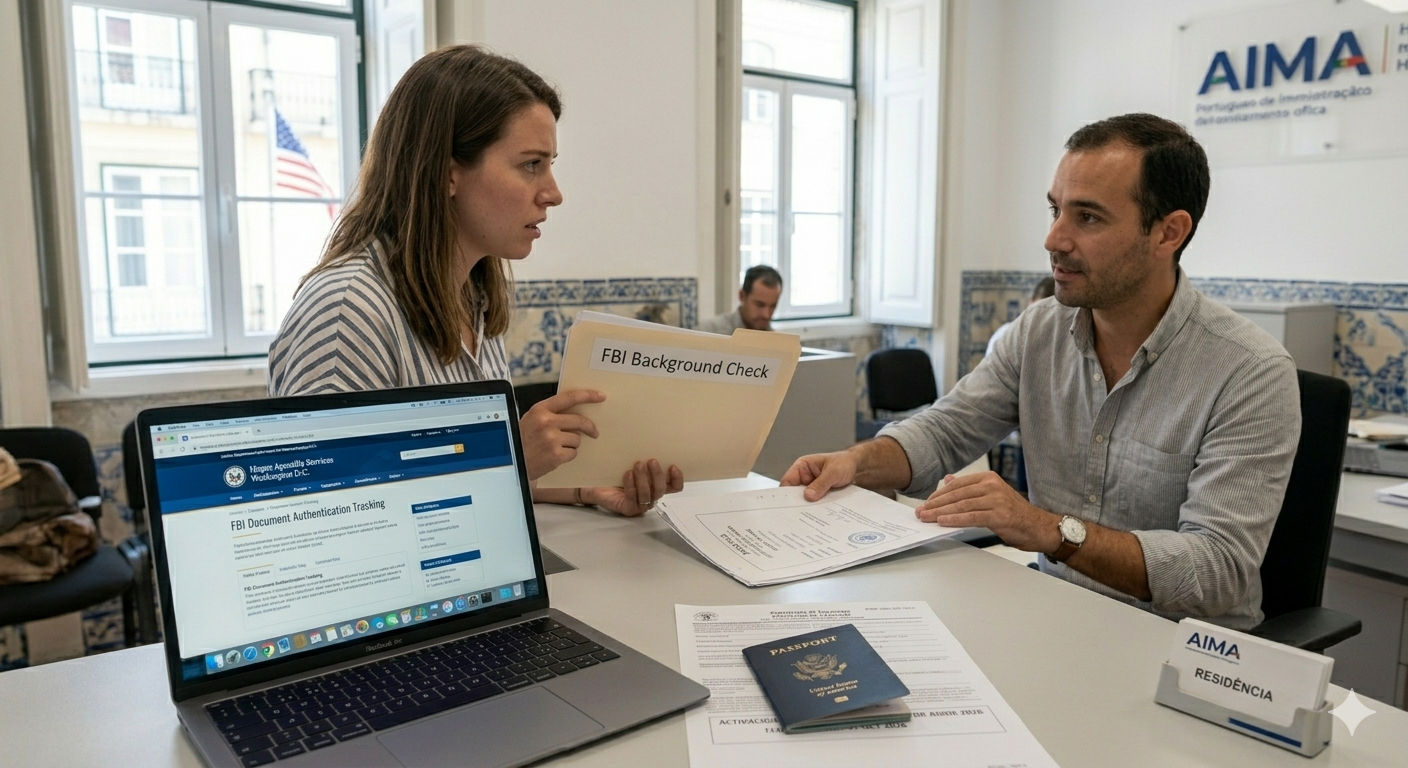
Picture this: You’ve just landed in Lisbon, ready to start your dream life under the Portuguese sun. You’ve got your folder of paperwork perfectly organized for your upcoming residency appointment. But as you double-check your U.S. birth certificate and FBI background check, your stomach drops. You realize they lack that vital, colorful stamp known as a Hague Apostille. You figure, “No big deal, I’ll just book an appointment at the U.S. Embassy right here in Lisbon and get it stamped.” You show up, pass through security, and hand over your documents—only for the official to tell you they can’t help you.
Let’s be honest: discovering that your vital American documents are legally useless in Portugal is a nightmare scenario. Many expats assume that any major U.S. embassy can simply wave a magic wand and validate American paperwork on foreign soil.
Here’s the thing: American diplomatic missions abroad have zero authority to legalize state or federal documents issued back home. If you need a Hague apostille service Lisbon US documents workaround, you have to look across the Atlantic, not down the street.
Why won’t the U.S. Embassy in Lisbon apostille my documents?
It sounds counterintuitive, but the rules are tightly woven. The U.S. Embassy and Consulate in Portugal explicitly state that they do not possess the authority to affix an apostille to U.S. birth, marriage, divorce, or death certificates, nor can they handle academic credentials or background checks.
The Snippet Target: To obtain a Hague Apostille for U.S. documents while living in Lisbon, you must bypass the local U.S. Embassy and apply directly to either the Secretary of State where the document was issued (for state records) or the U.S. Department of State (for federal records like FBI background checks).
Think of the embassy as a localized outpost for passport renewals and emergency citizen services, not a branch of your home state’s vital records department. Because both the U.S. and Portugal are active members of the Hague Apostille Convention, the validation must happen at the exact source of the document’s origin.
Did You Know?
The Federal vs. State Divide: Your document determines your path. An FBI background check can only be apostilled by the federal U.S. Department of State in Washington, D.C. Meanwhile, a birth or marriage certificate can only be stamped by the specific Secretary of State in the state where you were born or married. Mixing these up guarantees a swift rejection.
So how do you actually get this done from Portugal?
If you are already physically sitting in a café in Lisbon, you cannot simply go to a local Portuguese notary to fix an American document. You have to send the paperwork back home.
Imagine you are trying to return a broken appliance you bought in New York to a small boutique shop in Porto—it just won’t fly; it has to go back to the chain of origin. You essentially have two functional choices to get your paperwork sorted from afar:
1. The Long-Distance Mail Marathon
You can physically mail your original documents or certified copies directly to the appropriate state or federal office in the U.S., along with their required check or money order, a completed application form, and a pre-paid return shipping envelope.
2. Hiring a Specialized Courier Service
Because the mail route can take weeks—and the federal U.S. Department of State routinely clocks a four-to-six-week wait time for FBI background checks—most expats in Lisbon use a private apostille courier service. These agencies act as your physical proxy in the U.S., intercepting your documents, walking them into the correct government offices, and couriering them back to your Portuguese address in a matter of days.
Quick question for our readers:
Are you currently trying to figure out how to apostille a state-level document (like a marriage certificate) or a federal-level document (like an FBI check)?
- A) State-level document
- B) Federal-level document
- C) Both!
Drop your letter choice in the comments section below!
What to Watch: The Translation Timeline
Once your U.S. documents are finally stamped with their respective state or federal apostilles, you are still only halfway to the finish line. Portugal requires all foreign public documents to be professionally translated into Portuguese before they can be used for official residency or citizenship applications.
Here is the catch: the translation must include the text of the apostille itself. Do not make the mistake of translating your birth certificate early while waiting for the apostille to arrive in the mail. If you do, you will have to pay the translator a second time to translate the newly attached apostille certificate.
Quick Recap
- No Embassy Stamping: The U.S. Embassy in Lisbon cannot place a Hague Apostille on any document issued in the United States.
- Identify the Source: State documents go to the state’s Secretary of State; federal documents like FBI checks must go to Washington, D.C.
- Plan for Translation: Always wait until the physical apostille is attached to your document before sending it to a certified Portuguese translator.
Frequently Asked Questions
Can the U.S. Embassy in Lisbon at least notarize my document?
Yes, the embassy can provide standard notary services (like witnessing your signature on an affidavit or power of attorney) for a fee of $50 per notary seal. However, a notary stamp is not an apostille. If a Portuguese office (like AIMA) specifically asks for an apostilled document, an embassy notary will be rejected.
Can I send a digital copy or scan of my birth certificate to get an apostille?
Generally, no. For vital statistics like birth, marriage, and death certificates, the apostille authority requires the physical, original certificate issued by the local vital records office or city clerk. Photocopies or notarized digital scans are typically not accepted.
How long are apostilled U.S. documents valid for use in Portugal?
While the apostille itself technically doesn’t expire, the underlying document often does. For instance, Portuguese immigration authorities frequently demand that criminal background checks be issued within the last 3 to 6 months to ensure the data is completely fresh.
Have you found yourself trapped in the loop of trying to mail documents back to the States from Portugal, or are you looking for a trusted courier service to handle it for you? Let’s swap tips and troubleshoot your paperwork journey in the comments below!
Sources Verified via Official Channels:
- U.S. Embassy & Consulate in Portugal – Notarial and Authentication Services Guidelines
- U.S. Department of State – Bureau of Consular Affairs / Office of Authentications Framework
- Hague Conference on Private International Law (HCCH) – 1961 Apostille Convention Country Requirements