If you’ve ever dealt with paperwork in Spain (traductor jurado) or Brazil (tradutor juramentado), you probably expected to look up a state registry of licensed translators in Lisbon.
Let’s be honest: searching for a state-certified “sworn translator” inside Portugal will lead you down a rabbit hole. Portugal’s legal system handles translation authentication differently. Instead of swearing in individual translators through a public exam, Portuguese law puts the legal burden on the certification officer.
Think of it like getting a sworn affidavit at a bank. The person writing the translation is the expert witness, and the lawyer or notary is the judge verifying their identity and witness statement.
What actually makes a Portuguese-to-English translation legally valid?
To be accepted by official bodies like the UK Home Office, US Citizenship and Immigration Services (USCIS), or foreign universities, your Portuguese-to-English translation needs three distinct pieces bound together:
- The Source Document: A clear copy or original of your Portuguese document (e.g., an Assento de Nascimento or criminal record check).
- The English Translation: A complete, word-for-word translation mirroring the original layout, including stamps, seals, and marginal notes.
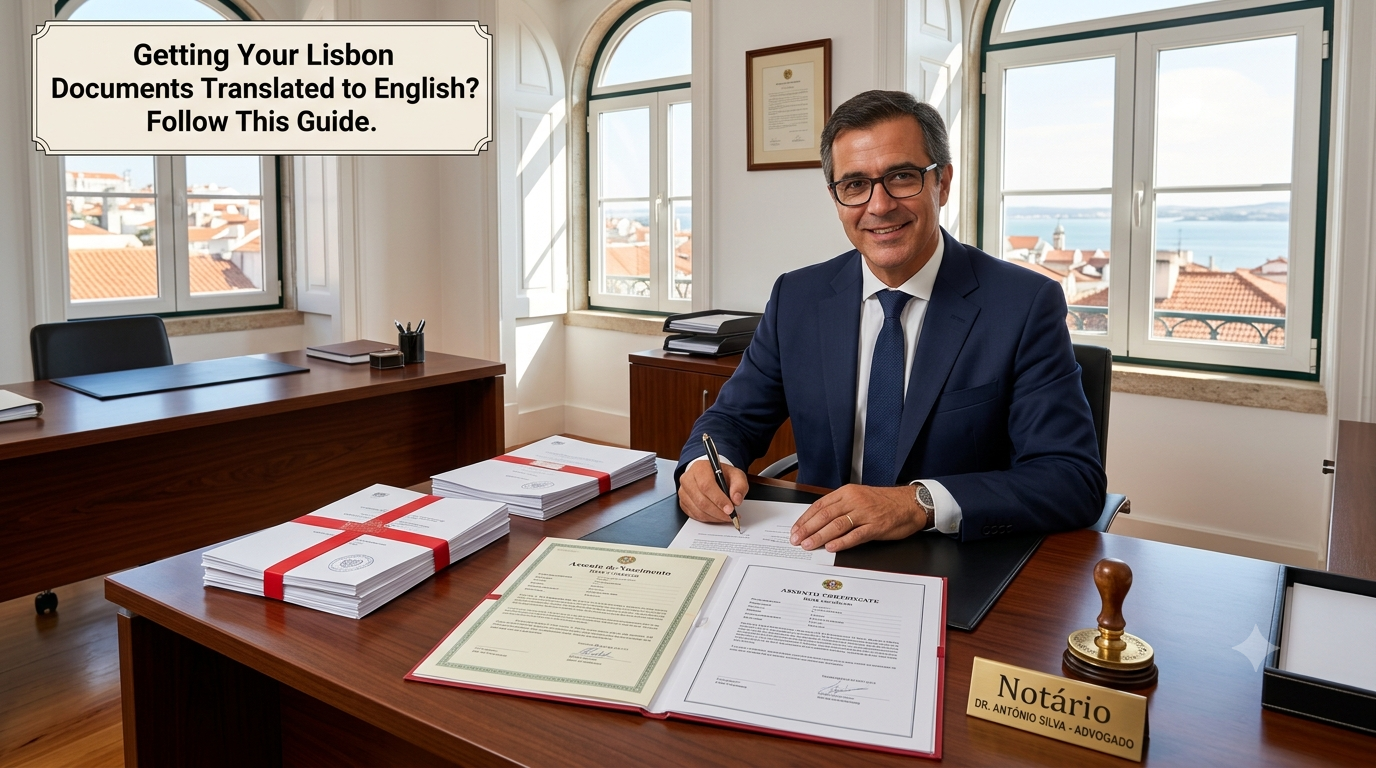
- The Certification Declaration: A formal cover page where the translator declares the translation is faithful to the original, signed and stamped in the presence of a Portuguese lawyer, solicitor, or notary.
If any of these three elements is missing, foreign authorities will reject your application faster than a Lisbon streetcar on a steep hill.
Did You Know? Under Portuguese Decree-Law 237/2001, registered lawyers (advogados) and solicitors (solicitadores) in Portugal hold equal legal authority to public notaries when certifying document translations. This simple policy shift cut official translation processing times in Lisbon from weeks down to 24–48 hours.
So, do you need a Hague Apostille as well?
This is where people often waste money. An apostille authenticates the origin of a public document, not the translation itself.
Here is how the sequence works in real life:
- Original Document: If your Portuguese public document is going to a country in the Hague Convention (like the US, UK, or Australia), you get a Hague Apostille attached to the original Portuguese document first (usually via the Procuradoria-Geral da República in Lisbon).
- Translation: A professional translator turns the entire document (including the Apostille!) into English.
- Certification: A lawyer or notary in Lisbon certifies the translation package.
If you reverse this order, you might end up paying double fees to re-certify everything.
Quick question — Have you ever had an official document translation rejected by an embassy or government agency? Drop your answer in the comments!
What to Watch
If you are preparing documents in Lisbon soon, keep these upcoming policy updates on your radar:
- Digital Certification Signatures: Portuguese registry offices and law firms are shifting toward qualified e-signatures (assinatura digital qualificada). Make sure your receiving institution abroad accepts digital PDF certifications or requires physical ink stamps.
- AIMA Processing Requirements: If your English documents are being translated back into Portuguese for immigration processes with AIMA (Agency for Integration, Migration and Asylum), certified translation rules remain strictly enforced with zero tolerance for self-translations.
Quick Recap
- No Sworn Translators in Portugal: Portugal certifies translations through lawyers, solicitors, or notaries rather than licensing individual sworn translators.
- Three-Part Bundle: A valid certified translation must bind the original document, the English translation, and a signed notary/lawyer declaration together.
- Apostille First: Always get your original Portuguese document apostilled at the Attorney General’s Office before sending it off for translation.
Frequently Asked Questions
Can I translate my own Portuguese birth certificate into English if I speak both languages fluently?
No. Official bodies like USCIS, the UK Home Office, and foreign universities strictly prohibit self-translation, even if you are a professional linguist or native speaker. An independent translator must complete and sign the declaration.
How much does a certified Portuguese-to-English translation cost in Lisbon?
For a standard single-page document (like a police check or birth certificate), expect to pay between €50 and €85 total. This usually covers both the translation fee (€30–€50) and the legal certification fee (€20–€35).
How long does the certified translation process take in Lisbon?
Standard turnaround for simple 1-to-2-page documents is typically 24 to 48 hours when using local Lisbon agencies or lawyers. Complex legal contracts or academic transcripts may take 3 to 5 business days.
Are you currently preparing Portuguese documents for use in an English-speaking country, or working through a visa process? Tell us which step is giving you the biggest headache in the comments below!
Sources & References
- M21Global & Portuguese Legal Framework: Certified Translation Guidelines in Portugal (Decree-Law no. 237/2001 regarding notary powers of lawyers and solicitors).
- Ministry of Justice Portugal: Procuradoria-Geral da República — Hague Apostille legalisation requirements for Portuguese public documents.
- UK Government (UKVI) & USCIS Guidelines: Standards for Certified English Translations of Foreign Official Documents.